Henrik Schwarz · 19 September 2026
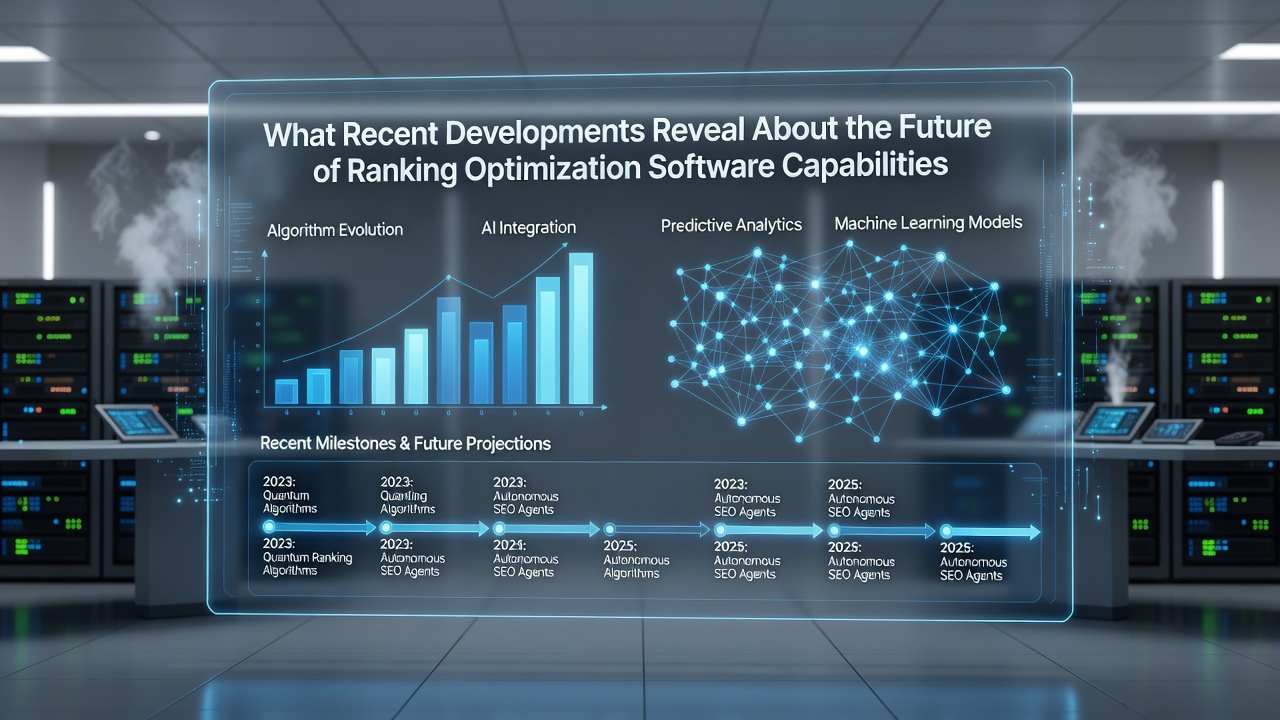
What Recent Developments Reveal About the Future of Ranking Optimization Software Capabilities
Recent developments in artificial intelligence and data processing have reshaped ranking optimization software, and researchers continue to track how these shifts expand the tools available for search performance analysis. Companies now integrate large language models directly into ranking platforms, which allows the software to simulate user behavior patterns and adjust keyword strategies in real time, while studies from academic institutions show measurable gains in prediction accuracy when these models process historical ranking data alongside current search engine updates.
AI Integration Expands Predictive Functions
Developers have embedded neural network architectures into ranking tools that previously relied on rule-based algorithms, and this change enables the software to forecast ranking fluctuations weeks ahead based on content quality signals and backlink velocity metrics. One study from a major university research lab demonstrated that these systems reduced manual audit time by analyzing millions of ranking factors simultaneously, whereas older versions required separate modules for each data type. Observers note that the shift occurred gradually through 2025, with major platforms releasing updates that combined natural language processing for content evaluation and computer vision for image optimization checks.
Engineers have also added reinforcement learning components that test multiple optimization scenarios against live search results, and data from industry reports indicates these features help users identify content gaps faster than traditional keyword density tools ever could. The integration extends to voice and visual search queries as well, where the software now processes multimodal inputs to suggest adjustments that align with emerging search engine preferences documented in technical documentation released by major providers.
Data Sources and Regulatory Influences Shape Tool Design
Access to structured data from public web indexes and proprietary APIs has grown more sophisticated, yet regulatory frameworks in various regions require ranking optimization platforms to incorporate privacy controls that limit how user interaction data gets stored or shared. According to findings published by the Canadian Digital Policy Initiative, new compliance standards have prompted developers to build consent management features directly into their dashboards, which ensures the software meets cross-border data handling requirements without disrupting core ranking analysis workflows.

European research groups have examined how these privacy layers affect the depth of competitive analysis available to users, and their reports highlight that anonymized aggregation methods now preserve ranking trend visibility while meeting stricter consent rules. In September 2026 several platforms introduced modular add-ons that let organizations toggle between full data access and restricted modes depending on their operational jurisdiction, and this flexibility reflects ongoing adaptations to evolving digital service regulations across multiple continents.
Real-Time Algorithm Adaptation Becomes Standard
Search engines release core updates more frequently than in previous years, and ranking optimization software has responded by incorporating live monitoring feeds that detect index changes within hours rather than days. These systems cross-reference update signals with user site performance metrics, then generate prioritized task lists that focus on elements most likely to influence current rankings. Industry organizations tracking software adoption rates report that teams using these adaptive features maintain steadier positions during volatility periods compared with those relying on periodic manual reviews.
Developers have also introduced collaborative filtering techniques borrowed from recommendation engines, which helps the software surface optimization opportunities based on patterns observed across similar websites in the same vertical. This approach reduces the need for exhaustive manual audits, and case examples shared in technical conferences show teams achieving consistent improvements by following the software-generated roadmaps that account for both on-page and off-page factors simultaneously.
Conclusion
Collectively these advancements point toward ranking optimization software that operates with greater autonomy while still requiring human oversight for strategic decisions. Continued refinement of predictive models, combined with regulatory-compliant data handling and faster adaptation mechanisms, suggests future versions will handle increasingly complex search landscapes with minimal user intervention beyond initial configuration and goal setting. The trajectory established through recent updates provides a clear framework for how these tools will evolve to meet demands from both search engines and end users in the years ahead.